




NXP Semiconductors PCA9422-EVB Evaluation Board

NXP Semiconductors PCA9422-EVB Evaluation Board is an easy-to-use circuit board allowing the user to exercise all the functions of the PCA9422 Power Management IC (PMIC). The PCA9422 PMIC is designed to streamline energy management in low-power microcontroller applications such as the i.MX RT500/RT600/RT700 and other compact systems. The NXP PCA9422-EVB supports Arduino® UNO interfaces. An onboard analog-to-digital converter (ADC) is used to monitor all regulator voltages through the Graphical User Interface (GUI).
Features
- Numerous test points provide easy access for monitoring all power and signal nodes
- Arduino UNO compatible
- 6-layer board layout supports standard design rules
- Standard USB Type-C® connector for communication with PC
- 3x BUCK converters, 1x BUCK-BOOST converter, and 4x LDOS
- Single-cell Li/LiPo + linear battery charger
- Terminal block charging connector
- JEITA-compliant battery temperature sensing
- ADC to monitor all regulator voltages
Applications
- Medical
- Continuous Glucose Monitoring (CGM)
- CGM readers
- Hearing aids
- Insulin pens
- Personal Diabetes Manager (PDM)
- Smart inhalers
- Vital signs monitors
- Consumer (smart homes)
- AR/VR headsets and AI smart glasses
- Hearable smartphones
- Smart watches and wristbands
- Major home appliances
- Smart appliances
Kit Contents
- Assembled and tested PCA9422-EVB evaluation board in an anti-static bag - available revisions
- SCH Rev F1 includes the PCA9422B PMIC version, operating all buck regulators at 4MHz
- SCH Rev F2 includes the PCA9422M PMIC version, operating all buck regulators at 2MHz
- USB-C cable
- Spare jumpers
Required Equipment
- 1-cell Li-ion battery
- 5.0V power supply or USB with enough current capability (VIN requires 1.2A or above, and VBAT requires 3.2A or above for maximum power output)
- PCA9422 GUI installed on a Windows® PC
- Multimeters to measure regulator outputs or other voltages
- Oscilloscope (optional)
- USB-enabled computer running Windows 7, 8, or 10
Resources
Block Diagram

Related PMICs
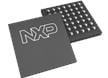
NXP Semiconductors PCA9422 Ultra-Low-Power Charger+Gauge PMICs
Complete power management solution for low-power microcontroller systems and similar applications.
Opublikowano: 2025-12-05
| Zaktualizowano: 2025-12-22