


Texas Instruments TPS7A02 Low-Dropout (LDO) Linear Regulator
Texas Instruments TPS7A02 Low-Dropout (LDO) Linear Regulator is an ultra-small, ultra-low quiescent current LDO regulator that can source 200mA with excellent transient performance. The TPS7A02, with an ultra-low IQ of 25nA, is designed specifically for applications where a very low quiescent current is a critical parameter. This device maintains low IQ consumption even in dropout mode to further increase battery life. When in shutdown or disabled mode, the device consumes ultra-low, 3nA IQ that helps increase the battery's shelf life. The TPS7A02 has an output range of 0.8V to 5.0V and is available in 50mV steps to support the lower core voltages of modern microcontrollers (MCUs).
The Texas Instruments TPS7A02 features a smart enable circuit with an internally controlled pulldown resistor that keeps the LDO disabled even when the EN pin is left floating. This circuit helps minimize the external components used to pull down the EN pin and the current drawn through the external pulldown circuit when the device is enabled. The TPS7A02 is fully specified for TJ = -40°C to +125°C operation.
Features
- 25nA (typ) ultra-low IQ, even in dropout
- 3nA (typ) shutdown IQ
- Excellent transient response (1mA to 50mA)
- < 10µs settling time
- 100mV undershoot
- Package
- 1.0mm x 1.0mm X2SON
- 1.5V to 6.0V input voltage range
- 0.8V to 5.0V (fixed) output voltage range
- 1.5% over temperature output accuracy
- Smart enable pulldown
- Very low dropout
- 270mV (max) at 200mA (VOUT = 3.3V)
- Stable with a 1µF or larger capacitor
Applications
- Wearable electronics
- Thermostats, smoke, and heat detectors
- Gas, heat, and water meters
- Blood glucose monitors and pulse oximeters
- Residential circuit breakers and fault indicators
- Building security and video surveillance devices
- EPOS card readers
Functional Block Diagram

Related Development Tool
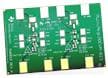
Texas Instruments MULTIPKGLDOEVM-823 LDO Regulator Evaluation Module
Helps evaluate the operation and performance of several common packages of linear regulators.
Opublikowano: 2020-01-08
| Zaktualizowano: 2024-05-02