




NXP Semiconductors LPCXpresso Development Platform
NXP Semiconductors LPCXpresso Development Platform offers a simple solution for rapid prototyping and evaluation developing designs with various NXP Arm® Cortex® MCUs. The LPCXpresso Development Platform includes low-cost LPCXpresso target boards to quickly get the user up and running. NXP Semiconductors LPCXpresso Development Boards work with the LPCXpresso IDE and other industry-leading partner toolchains. The target portion of LPCXpresso boards can be connected to expansion boards to provide a variety of interfaces and I/O devices. The onboard debug probe can debug other targets (all board types except MAX versions).
The onboard JTAG/SWD debug probe portion of an LPCXpresso Development Board is referred to as LPC-Link, or Link2 on later boards (except MAX variants). In early LPC-Link boards, the traces between the LPC-Link and the target can be cut to use the LPC-Link as a standalone JTAG debugger. On later LPCXpresso Development Boards, this can be accomplished with a simple jumper setting, enabling the LPCXpresso Board to be connected to an external target. This feature allows them to develop for various NXP's Cortex-M0, Cortex-M3, and Cortex-M4-based applications. LPC-Link can also support Arm 7/9-based applications. LPCXpresso MAX boards have an onboard debug probe that implements the CMSIS-DAP protocol to enable the user to use with LPCXpresso IDE, Mbed™, and a range of third-party tools. Link2 debug probes can be programmed to support CMSIS-DAP or evaluation versions of SEGGER J-Link using the LPCScrypt DFU utility.
Features
- An LPC target MCU
- A connector for an external debug probe
- Arduino Uno and Pmod™ shield connections for access to more off-the-shelf expansion hardware (MAX, V2, and V3)
- Mbed support (MAX and V2 boards)
- Easy upgrade with hardware expansion baseboards, Arduino shields, and Pmod boards (MAX, V2, and V3)
Associated Development Tools

NXP Semiconductors Płyta programistyczna LPCXpresso812 (OM1305UL) do mikrokontrolera LPC802
Potężna i elastyczna platforma deweloperska do testowania i prototypowania z wykorzystaniem mikrokontrolerów LPC81x.

NXP Semiconductors LPCXpresso43S67 Development Boards
Powerful and flexible development system used for evaluation and prototyping the LPC43S00 series.

NXP Semiconductors OM13074 LPCXpresso LPC11U37H Development Board
Designed to allow evaluation of the LPC11U37HFBD64 and make it as easy as possible to get started.

NXP Semiconductors OM13085 LPCXpresso Board
Comprised of an LPCXpresso™ target board, and the CMSIS-DAP compatible debug probe.

NXP Semiconductors OM13058 LPCXpresso LPC11U68 Development Board
Designed to allow evaluation of the LPC11U68 and make it as easy as possible to get started.

NXP Semiconductors Płytka rozwojowa LPCXpresso824-MAX do mikrokontrolerów LPC820
Umożliwia ocenę i prototypowanie 32-bitowych modułów Arm® LPC82x Cortex®-M0 + z rodziny MCU.
Videos
Related Products

NXP Semiconductors LPC 32-bit Arm® Technology Microcontrollers
Deliver high application performance and an excellent developer experience.
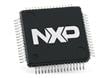
NXP Semiconductors LPC800 Series MCUs
Offer exceptional ease of use, design flexibility, efficiency, and advanced integration.
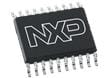
NXP Semiconductors 32-bitowe mikrokontrolery Arm® Cortex®-M0+ LPC82x
Zaprojektowane z myślą o lepszej integracji w porównaniu z LPC81x, mają pamięć o większej pojemności.

NXP Semiconductors LPC84x 32-bit Arm® Cortex®-M0+ MCUs
Low-power, 30MHz Arm® Cortex®-M0+ core based Microcontroller with advanced power optimization.