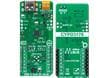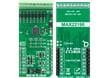

MIKROE-5168

Mikroe
932-MIKROE-5168
MIKROE-5168

Produc.:

Opis:
Interface Development Tools I2C MUX 6 Click

Na stanie magazynowym: 4

Stany magazynowe:
4 Wysylamy natychmiast
Średni czas produkcji:
10 tygodni Oczekiwany czas produkcji w fabryce dotyczący ilości większych niż pokazane.
Minimum: 1   Wielokrotności: 1
Cena jednostkowa:
-,-- zł
wewn. Cena:
-,-- zł
Szac. taryfa:

Cennik (PLN)

Il. Cena jednostkowa
wewn. Cena
51,77 zł 51,77 zł

Atrybuty produktu Wartość atrybutu Wybierz atrybut
Mikroe
Kategoria produktów: Narzędzia do rozbudowy układów interfejsu
RoHS:  
Add-On Boards
I2C
PCA9518
Marka: Mikroe
Kraj montażu: Not Available
Kraj wytworzenia: Not Available
Kraj pochodzenia: RS
Wymiary: 42.9 mm X 25.4 mm
Maksymalna temperatura robocza: + 85 C
Minimalna temperatura robocza: - 40 C
Napięcie robocze zasilania: 3.3 V
Rodzaj produktu: Interface Development Tools
Wielkość opakowania producenta: 1
Podkategoria: Development Tools
Znalezione produkty:
Aby pokazać podobne produkty, zaznacz przynajmniej jedno pole wyboru
Aby wyświetlić podobne produkty w tej kategorii, zaznacz co najmniej jedno pole wyboru powyżej.
Wybrane atrybuty: 0

CAHTS:
8543700000
USHTS:
8543709860
JPHTS:
854370000
ECCN:
EAR99

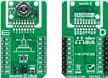
I2C MUX 6 Click

Mikroe I2C MUX 6 Click represents a bidirectional selector dedicated to I2C slave address conflicts applications. The board features the Texas Instruments PCA9518  expandable five-channel bidirectional buffer controlled by the I2C-bus. The PCA9518 overcomes the restriction of maximum bus capacitance by separating and buffering the I2C data (SDA) and clock (SCL) lines into multiple groups of 400pF I2C channels. It provides activation of the desired channel via a given Enable pin and permits extension of the I2C-bus, through an onboard expansion header, by buffering both the data (SDA) and the clock (SCL) lines enabling virtually an unlimited number of buses of 400pF.

Interface Click Boards

Mikroe Interface Click Boards are used to add new interfaces to boards for applications and designs. Mikroe Click Boards are based around the mikroBUS™ interface standard and easily add incredible system capabilities. The devices include interfaces like Ethernet, USB, and Fiber Optics, to name a few.