
MIKROE-4184

Mikroe
932-MIKROE-4184
MIKROE-4184

Produc.:

Opis:
Interface Development Tools SPI Extend Click

Na stanie magazynowym: 26

Stany magazynowe:
26 Wysylamy natychmiast
Średni czas produkcji:
7 tygodni Oczekiwany czas produkcji w fabryce dotyczący ilości większych niż pokazane.
Minimum: 1   Wielokrotności: 1
Cena jednostkowa:
-,-- zł
wewn. Cena:
-,-- zł
Szac. taryfa:

Cennik (PLN)

Il. Cena jednostkowa
wewn. Cena
85,05 zł 85,05 zł

Atrybuty produktu Wartość atrybutu Wybierz atrybut
Mikroe
Kategoria produktów: Narzędzia do rozbudowy układów interfejsu
Add-On Boards
SPI
LTC4332
Marka: Mikroe
Kraj montażu: Not Available
Kraj wytworzenia: Not Available
Kraj pochodzenia: RS
Wymiary: 57.15 mm x 25.4 mm
Do użytku z : Industrial Control, Sensor Installations
Rodzaj interfejsu: GPIO, I2C, SPI
Maksymalna temperatura robocza: + 70 C
Minimalna temperatura robocza: 0 C
Napięcie robocze zasilania: 3.3 V, 5 V
Rodzaj produktu: Interface Development Tools
Wielkość opakowania producenta: 1
Podkategoria: Development Tools
Znalezione produkty:
Aby pokazać podobne produkty, zaznacz przynajmniej jedno pole wyboru
Aby wyświetlić podobne produkty w tej kategorii, zaznacz co najmniej jedno pole wyboru powyżej.
Wybrane atrybuty: 0

TARIC:
8471800000
CAHTS:
8471801000
USHTS:
8471801000
JPHTS:
847180000
MXHTS:
8471800402
BRHTS:
84718000
ECCN:
EAR99

Interface Click Boards

Mikroe Interface Click Boards are used to add new interfaces to boards for applications and designs. Mikroe Click Boards are based around the mikroBUS™ interface standard and easily add incredible system capabilities. The devices include interfaces like Ethernet, USB, and Fiber Optics, to name a few.

SPI Extend Click

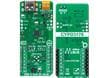
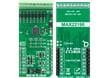
Mikroe SPI Extend Click is used for applications that require extending the SPI communication bus over a long distance. The Mikroe SPI Extend Click board features the Analog Devices LTC4332 SPI Slave Extender device. The LTC4332 can transmit SPI data using a ±60V fault-protected differential transceiver. The LTC4332 includes an interrupt signal, up to 2MHz over two twisted-pair cables. The extended common-mode range and high common-mode rejection on the differential link provide tolerance to large ground differences between nodes. The board can also provide a control interface using a separate slave select for configuration and fault monitoring.