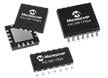

ATXMEGA128B3-MH

Microchip Technology
556-ATXMEGA128B3-MH
ATXMEGA128B3-MH

Produc.:

Opis:
8-bit Microcontrollers - MCU 8/16-bit AVR MCU

Model ECAD:
Pobierz bezpłatną aplikację Library Loader, aby skonwertować ten plik do narzędzia ECAD Tool. Dowiedz się więcej o modelu ECAD.

Dostępność

Stany magazynowe:
Niedostępne na stanie
Średni czas produkcji:
4 tygodni Oczekiwany czas produkcji w fabryce.
Minimum: 260   Wielokrotności: 260
Cena jednostkowa:
-,-- zł
wewn. Cena:
-,-- zł
Szac. taryfa:
Ten produkt jest wysyłany BEZPŁATNIE

Cennik (PLN)

Il. Cena jednostkowa
wewn. Cena
19,74 zł 5 132,40 zł

Atrybuty produktu Wartość atrybutu Wybierz atrybut
Microchip
Kategoria produktów: Mikrokontrolery MCU 8-bitowe
RoHS:  
AVR
128 kB
8 kB
QFN-64
32 MHz
12 bit
36 I/O
1.6 V
3.6 V
SMD/SMT
8 bit/16 bit
- 40 C
+ 85 C
XMEGA B3
Tray
Analogowe napięcie zasilania: 1.6 V to 3.6 V
Marka: Microchip Technology
Rodzaj danych RAM: SRAM
Wielkość danych ROM: 2 kB
Rodzaj danych ROM: EEPROM
Napięcie we/wy: 1.6 V to 3.6 V
Rodzaj interfejsu: I2C, SPI, USART, USB
Wrażliwość na wilgoć: Yes
Liczba kanałów ADC: 8 Channel
Liczba timerów/liczników: 2 Timer
Seria procesora: AVR XMEGA
Produkt: MCUs
Rodzaj produktu: 8-bit Microcontrollers - MCU
Rodzaj pamięci dla programu: Flash
Wielkość opakowania producenta: 260
Podkategoria: Microcontrollers - MCU
Nazwa handlowa: XMEGA
Timery Watchdog: Watchdog Timer
Jednostka masy: 206,300 mg
Znalezione produkty:
Aby pokazać podobne produkty, zaznacz przynajmniej jedno pole wyboru
Aby wyświetlić podobne produkty w tej kategorii, zaznacz co najmniej jedno pole wyboru powyżej.
Wybrane atrybuty: 0

Ta funkcja wymaga włączonej obsługi języka JavaScript.

TARIC:
8542319000
CNHTS:
8542319090
CAHTS:
8542310000
USHTS:
8542310015
JPHTS:
854231032
KRHTS:
8542311000
MXHTS:
8542310302
ECCN:
5A992.C

Functional Safety Solutions

Microchip Technology Functional Safety Solutions offer robustness, reliability, and safety to end-products. In some application segments, these requirements are formalized and mandatory, while in others, they are implemented to differentiate the product and take the step from a good product to an excellent product. The standards for functional safety depend on the market that is targeted. Many standards support multiple levels of rigorousness, which are applied depending on the likelihood and severity of the hazard. The methods of addressing hazards range from detecting single failures and putting the system into a safe state to full redundancy, where failures should not only be detected but also corrected without any interruption or degradation of service.

Atmel AVR ATXMEGA Microcontrollers with USB - INACTIVE

Atmel AVR ATXMEGA Microcontrollers with USB offers 3 data memory features and various peripheral features. AVR ATXMEGA256A3B Microcontrollers feature 256 KB of in-system self-programmable flash, 4 KB of EEPROM and 16 KB of internal SRAM. AVR ATXMEGA256A3U Microcontrollers feature 64-256 KB of in-system self-programmable flash, 2-4 KB of EEPROM and 4-16 KB of internal SRAM. AVR ATXMEGA32A4U Microcontrollers feature 16-128 KB of in-system self-programmable flash, 1-2 KB of EEPROM and 2-8 KB of internal SRAM. AVR ATXMEGA256A3U and ATXMEGA32A4U Microcontrollers offer USB device interface USB 2.0 full speed (12Mbps) and low speed (1.5Mbps) device compliant and 32 endpoints with full configuration flexibility. Typical applications for Atmel AVR ATXMEGA Microcontrollers include optical, climate control, HVAC and Zigbee®.
Learn More

AVR® XMEGA® 8/16-bit Microcontrollers

Microchip AVR XMEGA 8/16-bit Microcontrollers are low-power, high-performance and peripheral-rich CMOS 8/16-bit microcontrollers based on the AVR enhanced RISC architecture. By executing instructions in a single clock cycle, the Microchip AVR XMEGA 8/16-bit Microcontrollers achieve throughputs CPU approaching one million instructions per second (MIPS) per megahertz, allowing the system designer to optimize power consumption versus processing speed. AVR XMEGA 8/16-bit Microcontrollers combine a rich instruction set with 32 registers that are directly connected to the arithmetic logic unit (ALU), allowing two independent registers to be accessed in a single instruction, executed in one clock cycle. The resulting architecture is more code efficient while achieving throughputs many times faster than conventional single-accumulator or CISC based microcontrollers.