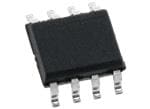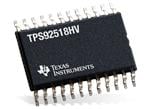

TPS92518HVPWPR

Texas Instruments
595-TPS92518HVPWPR
TPS92518HVPWPR

Produc.:

Opis:
LED Lighting Driver ICs 65-V dual buck LED c ontroller with SPI A 595-TPS92518HVPWPT

Model ECAD:
Pobierz bezpłatną aplikację Library Loader, aby skonwertować ten plik do narzędzia ECAD Tool. Dowiedz się więcej o modelu ECAD.

Na stanie magazynowym: 1 169

Stany magazynowe:
1 169 Wysylamy natychmiast
Średni czas produkcji:
18 tygodni Oczekiwany czas produkcji w fabryce dotyczący ilości większych niż pokazane.
Minimum: 1   Wielokrotności: 1
Cena jednostkowa:
-,-- zł
wewn. Cena:
-,-- zł
Szac. taryfa:
Opakowanie:
Komplet Opakowanie zbiorcze (zamówienie w wielokrotności 2000)

Cennik (PLN)

Il. Cena jednostkowa
wewn. Cena
Cut Tape / MouseReel™
12,56 zł 12,56 zł
9,42 zł 94,20 zł
8,60 zł 215,00 zł
7,78 zł 778,00 zł
7,35 zł 1 837,50 zł
7,01 zł 3 505,00 zł
6,62 zł 6 620,00 zł
Komplet Opakowanie zbiorcze (zamówienie w wielokrotności 2000)
6,36 zł 12 720,00 zł
6,19 zł 24 760,00 zł
† 27,00 zł - opłata za opcje MouseReel™ zostanie dołączona do koszyka i tam doliczona. Wszystkie zamówienia z opcją MouseReel™ nie podlegają zwrotom i nie są odwoływalne.

Alternatywne pakowanie

Produc. Nr części:
Opakowanie:
Reel, Cut Tape, MouseReel
Dostępność:
Na stanie magazynowym
Cena:
14,02 zł
Min.:
1

Podobny produkt

Texas Instruments TPS92518HVPWPT
Texas Instruments
LED Lighting Driver ICs 65-V dual buck LED c ontroller with SPI A 595-TPS92518HVPWPR

Atrybuty produktu Wartość atrybutu Wybierz atrybut
Texas Instruments
Kategoria produktów: Układy scalone sterowników LED
RoHS:  
2 Output
Buck
5 A
HTSSOP-24
65 V
6.5 V
2 MHz
Adjustable
TPS92518HV
- 40 C
+ 125 C
Brightness Control/Dimming, High Output Accuracy, Thermal Shutdown
Reel
Cut Tape
MouseReel
Marka: Texas Instruments
Zestaw projektowy: TPS92518EVM-878
Przyciemnienie: Analog, PWM
Napięcie wejściowe: 6.5 V to 65 V
Wrażliwość na wilgoć: Yes
Styl mocowania: SMD/SMT
Liczba kanałów: 2 Channel
Produkt: LED Controllers
Rodzaj produktu: LED Lighting Drivers
Wielkość opakowania producenta: 2000
Podkategoria: Driver ICs
Prąd zasilania – max.: 4 mA
Rodzaj: Controller Inductive
Jednostka masy: 154,500 mg
Znalezione produkty:
Aby pokazać podobne produkty, zaznacz przynajmniej jedno pole wyboru
Aby wyświetlić podobne produkty w tej kategorii, zaznacz co najmniej jedno pole wyboru powyżej.
Wybrane atrybuty: 0

Ta funkcja wymaga włączonej obsługi języka JavaScript.

TARIC:
8542399000
CNHTS:
8542399000
CAHTS:
8542310000
USHTS:
8542310030
MXHTS:
8542399901
ECCN:
EAR99

IS32LT3175N/P Single-Channel Linear LED Drivers

ISSI IS32LT3175N/P Single-Channel Linear LED Drivers come with fade in/out and PWM dimming. The regulators serve as a stand-alone LED driver-configurable from 20mA to 150mA with external resistors, no microcontroller is necessary. A logic level “courtesy light” signal from the PWM pin can be interfaced to precisely drive the LED channel. The IS32LT3175P obtains a positive polarity PWM signal. In addition, the IS32LT3175N obtains a negative polarity PWM signal. The regulator integrates a 63-step fade-in and fades out the algorithm (Gamma correction). This causes the output LED current to increasingly rise up to the full source value after the EN pin is pulsed.

TPS92518HV Dual Buck LED Controllers

Texas Instruments TPS92518HV Dual Buck LED Controllers with SPI Interface, Analog and PWM Dimming are ideal for multichannel and platform lighting driver module (LDM) applications. The TPS92518HV LED Controllers apply a high-voltage option with an input range of up to 65V. A quasi-hysteretic control method in the Texas Instruments TPS92518HV supports switching frequencies ranging from 1kHz to 2MHz, enabling superior, high-frequency shunt FET dimming. Additionally, the control method handles demanding dynamic loads of adaptive LED matrix-based headlamp systems. Software programmable SPI set points such as Precision Peak Current, Controlled Off-Time, and Output Voltage Sense Software allow designers to develop a single LED driver solution for multiple load configurations. These SPI set points can be rapidly reconfigured for future LED driver design requirements.