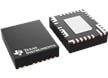

TPS2343DDPR

595-TPS2343DDPR
TPS2343DDPR

Produc.:

Opis:
Hot Swap Voltage Controllers Dual Slot PCI-X 2.0 Hot-Plug Pwr Cntrlr

Cykl życia:
Przestarzały/nieaktualny
Model ECAD:
Pobierz bezpłatną aplikację Library Loader, aby skonwertować ten plik do narzędzia ECAD Tool. Dowiedz się więcej o modelu ECAD.
Firma Mouser aktualnie nie sprzedaje tego produktu w Twoim regionie.

Dostępność

Stany magazynowe:

Atrybuty produktu Wartość atrybutu Wybierz atrybut
Texas Instruments
Kategoria produktów: Kontrolery napięci hot swap
Ograniczenia dotyczące wysyłki
 Firma Mouser aktualnie nie sprzedaje tego produktu w Twoim regionie.
RoHS:  
PCI Power Management
1.25 A
13.2 V
10.8 V
2 Channel
3 mA
- 40 C
+ 85 C
SMD/SMT
HTSSOP-80
Reel
Cut Tape
MouseReel
Yes
Marka: Texas Instruments
Wrażliwość na wilgoć: Yes
Rodzaj produktu: Hot Swap Voltage Controllers
Seria: TPS2343
Wielkość opakowania producenta: 2000
Podkategoria: PMIC - Power Management ICs
Jednostka masy: 262,400 mg
Znalezione produkty:
Aby pokazać podobne produkty, zaznacz przynajmniej jedno pole wyboru
Aby wyświetlić podobne produkty w tej kategorii, zaznacz co najmniej jedno pole wyboru powyżej.
Wybrane atrybuty: 0

TARIC:
8542399000
CNHTS:
8542319000
USHTS:
8542390090
MXHTS:
85423999
ECCN:
EAR99

LM5060 High-Side Protection Controllers

Texas Instruments LM5060 High-Side Protection Controllers with Low Quiescent Current offers intelligent control of a high-side N-channel MOSFET during normal on/off transitions and fault conditions. The constant rise time of the output voltage results from the inrush current control. Both an Input UVLO (with hysteresis) and a programmable input OVP are provided, with an enable input offering a remote on or off control. The initial start-up VGS fault detection delay time, the transition VDS fault detection delay time, and the continuous over-current VDS fault detection delay time is programmed from a single capacitor. The MOSFET is latched off until either the enable input, or the UVLO input is toggled low and then high when a detected fault condition persists longer than the allowed fault delay time.