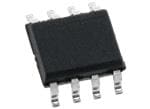

LM3497MM/NOPB

Texas Instruments
926-LM3497MM/NOPB
LM3497MM/NOPB

Produc.:

Opis:
LED Lighting Driver ICs A 926-LM3497MMX/NOPB A 926-LM3497MMX/NOP A 926-LM3497MMX/NOPB

Model ECAD:
Pobierz bezpłatną aplikację Library Loader, aby skonwertować ten plik do narzędzia ECAD Tool. Dowiedz się więcej o modelu ECAD.

Dostępność

Stany magazynowe:
Niedostępne na stanie
Średni czas produkcji:
18 tygodni Oczekiwany czas produkcji w fabryce.
Minimum: 1000   Wielokrotności: 1000
Cena jednostkowa:
-,-- zł
wewn. Cena:
-,-- zł
Szac. taryfa:
Ten produkt jest wysyłany BEZPŁATNIE

Cennik (PLN)

Il. Cena jednostkowa
wewn. Cena
Komplet Opakowanie zbiorcze (zamówienie w wielokrotności 1000)
3,70 zł 3 700,00 zł
3,56 zł 7 120,00 zł
3,50 zł 17 500,00 zł

Atrybuty produktu Wartość atrybutu Wybierz atrybut
Texas Instruments
Kategoria produktów: Układy scalone sterowników LED
RoHS:  
MSOP-10
LM3497
Reel
Marka: Texas Instruments
Kraj montażu: Not Available
Kraj wytworzenia: Not Available
Kraj pochodzenia: MY
Styl mocowania: SMD/SMT
Rodzaj produktu: LED Lighting Drivers
Wielkość opakowania producenta: 1000
Podkategoria: Driver ICs
Znalezione produkty:
Aby pokazać podobne produkty, zaznacz przynajmniej jedno pole wyboru
Aby wyświetlić podobne produkty w tej kategorii, zaznacz co najmniej jedno pole wyboru powyżej.
Wybrane atrybuty: 0

TARIC:
8542399000
CNHTS:
8542319000
CAHTS:
8542390000
USHTS:
8542390090
JPHTS:
8542390990
MXHTS:
85423999
ECCN:
EAR99

IS32LT3175N/P Single-Channel Linear LED Drivers

ISSI IS32LT3175N/P Single-Channel Linear LED Drivers come with fade in/out and PWM dimming. The regulators serve as a stand-alone LED driver-configurable from 20mA to 150mA with external resistors, no microcontroller is necessary. A logic level “courtesy light” signal from the PWM pin can be interfaced to precisely drive the LED channel. The IS32LT3175P obtains a positive polarity PWM signal. In addition, the IS32LT3175N obtains a negative polarity PWM signal. The regulator integrates a 63-step fade-in and fades out the algorithm (Gamma correction). This causes the output LED current to increasingly rise up to the full source value after the EN pin is pulsed.