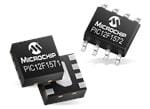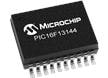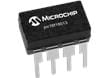

PIC12F1572-I/SN

Microchip Technology
579-PIC12F1572-I/SN
PIC12F1572-I/SN

Produc.:

Opis:
8-bit Microcontrollers - MCU 16-bit PWM 256 RAM 3.5KB Comparator

Model ECAD:
Pobierz bezpłatną aplikację Library Loader, aby skonwertować ten plik do narzędzia ECAD Tool. Dowiedz się więcej o modelu ECAD.

Na stanie magazynowym: 106 826

Stany magazynowe:
106 826 Wysylamy natychmiast
Średni czas produkcji:
6 tygodni Oczekiwany czas produkcji w fabryce dotyczący ilości większych niż pokazane.
Minimum: 1   Wielokrotności: 1
Cena jednostkowa:
-,-- zł
wewn. Cena:
-,-- zł
Szac. taryfa:

Cennik (PLN)

Il. Cena jednostkowa
wewn. Cena
2,77 zł 2,77 zł
2,73 zł 27,30 zł
2,59 zł 64,75 zł
2,44 zł 244,00 zł
2,39 zł 2 390,00 zł
2,35 zł 11 750,00 zł

Alternatywne pakowanie

Produc. Nr części:
Opakowanie:
Reel, Cut Tape, MouseReel
Dostępność:
Na stanie magazynowym
Cena:
3,00 zł
Min.:
1

Atrybuty produktu Wartość atrybutu Wybierz atrybut
Microchip
Kategoria produktów: Mikrokontrolery MCU 8-bitowe
RoHS:  
PIC12
3.5 kB
256 B
SOIC-8
32 MHz
10 bit
6 I/O
2.3 V
5.5 V
SMD/SMT
8 bit
- 40 C
+ 85 C
PIC12(L)F157x
AEC-Q100
Tube
Marka: Microchip Technology
Rodzaj danych RAM: SRAM
Wielkość danych ROM: 3.5 kB
Rodzaj danych ROM: Flash
Wrażliwość na wilgoć: Yes
Liczba kanałów ADC: 4 Channel
Liczba timerów/liczników: 4 Timer
Seria procesora: PIC12
Rodzaj produktu: 8-bit Microcontrollers - MCU
Rodzaj pamięci dla programu: Flash
Wielkość opakowania producenta: 100
Podkategoria: Microcontrollers - MCU
Nazwa handlowa: PIC
Timery Watchdog: Watchdog Timer, Extended
Jednostka masy: 540 mg
Znalezione produkty:
Aby pokazać podobne produkty, zaznacz przynajmniej jedno pole wyboru
Aby wyświetlić podobne produkty w tej kategorii, zaznacz co najmniej jedno pole wyboru powyżej.
Wybrane atrybuty: 0

Ta funkcja wymaga włączonej obsługi języka JavaScript.

TARIC:
8542319000
CNHTS:
8542319090
CAHTS:
8542310000
USHTS:
8542310015
JPHTS:
854231032
KRHTS:
8542311000
MXHTS:
8542310302
ECCN:
3A991.a.2

PIC12F157x 8-Bit Microcontrollers

Microchip's PIC12F157X 8-Bit Microcontrollers combine the capabilities of 16-bit PWMs with Intelligent Analog to suit a variety of applications. These devices deliver three 16-bit PWMs with independent timers, for applications where high resolution is needed, such as LED lighting, stepper motors, power supplies, and other general-purpose applications. The core independent peripherals (16-bit PWMs, Complementary Waveform Generator), Enhanced Universal Synchronous Asynchronous Receiver Transceiver and Intelligent Analog (ADCs, Comparator, and DAC) enable closed-loop feedback and communication for use in multiple market segments, such as LIN applications.

Automotive 8-Bit Microcontrollers

Microchip Technology Automotive 8-Bit Microcontrollers include MCUs with the PIC® and AVR® architecture. Capturing the best features of both architectures enables Microchip to offer plentiful solutions for every type of automotive system. From Human Machine Interface (HMI) applications based on touch technology to underhood applications requiring high-temperature robustness to simple watchdog-type applications requiring a small form factor, users can find extensive options that meet specific requirements.

Motor Control for Brushed DC Motors

Microchip Technology Motor Control for Brushed DC Motors is a full line of MCUs, gate drivers, and ignition controllers for brushed DC Motor control. These full-featured devices feature analog, core independent, and communication peripherals combined with eXtreme Low-Power (XLP) technology. The MCUs can be used for various general-purpose and low-power applications. The devices feature multiple PWMs, communication, temperature sensor, and memory features like Memory Access Partition (MAP).

Functional Safety Solutions

Microchip Technology Functional Safety Solutions offer robustness, reliability, and safety to end-products. In some application segments, these requirements are formalized and mandatory, while in others, they are implemented to differentiate the product and take the step from a good product to an excellent product. The standards for functional safety depend on the market that is targeted. Many standards support multiple levels of rigorousness, which are applied depending on the likelihood and severity of the hazard. The methods of addressing hazards range from detecting single failures and putting the system into a safe state to full redundancy, where failures should not only be detected but also corrected without any interruption or degradation of service.