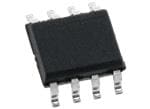

XR46014ISETR

701-XR46014ISETR
XR46014ISETR

Produc.:

Opis:
LED Lighting Driver ICs High Voltage Constant

Cykl życia:
Przestarzały/nieaktualny
Model ECAD:
Pobierz bezpłatną aplikację Library Loader, aby skonwertować ten plik do narzędzia ECAD Tool. Dowiedz się więcej o modelu ECAD.
Firma Mouser aktualnie nie sprzedaje tego produktu w Twoim regionie.

Dostępność

Stany magazynowe:

Atrybuty produktu Wartość atrybutu Wybierz atrybut
MaxLinear
Kategoria produktów: Układy scalone sterowników LED
Ograniczenia dotyczące wysyłki
 Firma Mouser aktualnie nie sprzedaje tego produktu w Twoim regionie.
RoHS:  
1 Output
Boost, Buck
250 mA
SOT-223-3
80 V
3 V
Adjustable
- 40 C
+ 125 C
Constant Current
Reel
Cut Tape
Marka: MaxLinear
Zestaw projektowy: XR46014-EVB
Do użytku z : Dimming applications and full balance systems
Napięcie wejściowe: 3 V to 80 V
Styl mocowania: SMD/SMT
Liczba kanałów: 1 Channel
Produkt: LED Drivers
Rodzaj produktu: LED Lighting Drivers
Wielkość opakowania producenta: 2500
Podkategoria: Driver ICs
Prąd zasilania – max.: 250 mA
Rodzaj: AC Step Driver
Jednostka masy: 6 g
Znalezione produkty:
Aby pokazać podobne produkty, zaznacz przynajmniej jedno pole wyboru
Aby wyświetlić podobne produkty w tej kategorii, zaznacz co najmniej jedno pole wyboru powyżej.
Wybrane atrybuty: 0

Ta funkcja wymaga włączonej obsługi języka JavaScript.

TARIC:
8542399000
CNHTS:
8542399000
CAHTS:
8542390000
USHTS:
8542390090
MXHTS:
8542399901
ECCN:
EAR99

IS32LT3175N/P Single-Channel Linear LED Drivers

ISSI IS32LT3175N/P Single-Channel Linear LED Drivers come with fade in/out and PWM dimming. The regulators serve as a stand-alone LED driver-configurable from 20mA to 150mA with external resistors, no microcontroller is necessary. A logic level “courtesy light” signal from the PWM pin can be interfaced to precisely drive the LED channel. The IS32LT3175P obtains a positive polarity PWM signal. In addition, the IS32LT3175N obtains a negative polarity PWM signal. The regulator integrates a 63-step fade-in and fades out the algorithm (Gamma correction). This causes the output LED current to increasingly rise up to the full source value after the EN pin is pulsed.